Castle Busters
- 3.8
- Rating
- 10.00M
- Installs
- Free
- Price
 Analysis by App-foxy
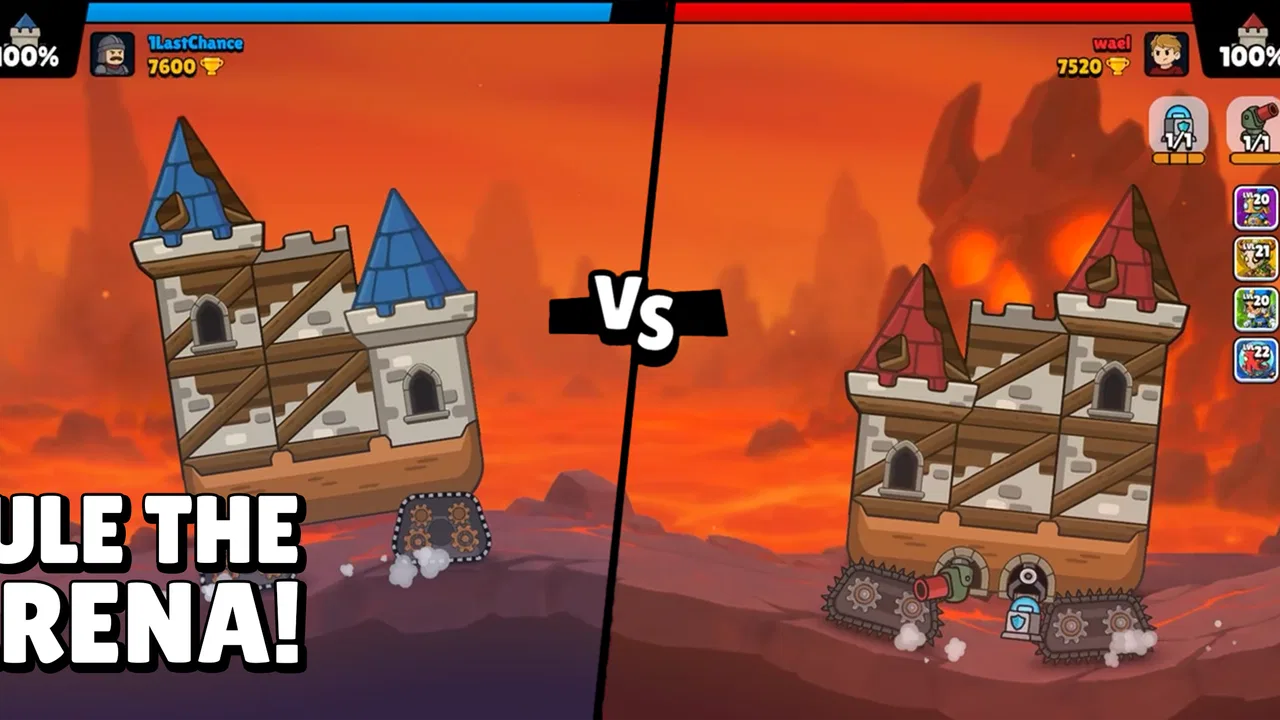
Castle Clashers is the kind of action game I open when I want a quick burst of destruction rather than a long, story-heavy session. Its entire appeal is easy to understand: aim at a castle, choose the right moment, and bring it down. That simple idea gives the game an immediately readable rhythm, but it also means the quality of each attempt depends heavily on how satisfying the aiming, impact, and restart cycle feels on your device.
After spending time with it, I see a focused experience from VOODOO rather than a broad action adventure. It is free to download, rated Everyone 10+, and available for devices running Android 8.0 or later. The current version is 1.6.1, while the game’s release date was Jul 18, 2025. Those details matter mostly because this is a title aimed at casual, repeatable play: you want it to start quickly, respond promptly, and let you recover from a failed attempt without turning a short break into a commitment.
How the destruction feels in everyday play
The best way to approach Castle Clashers is as a compact action challenge. I would not choose it when I am looking for deep character development, a large world, or a complicated control system. I would choose it while waiting for transport, taking a short break, or relaxing after a task when I want something that communicates its goal immediately.
You May Also Like

 Blood Strike: 2.5 Anniversary
Blood Strike’s Loadouts Turn Every Drop Into a Tactical Gamble
A close look at Blood Strike’s custom loadouts: how fast access to signature weapons reshapes its battle royale rhythm, rewards preparation, and narrows the gap between fights.

 Pandora - Music & Podcasts
Pandora’s Music Is Easy to Start, but Harder to Recover
Pandora’s strength is its low-effort path from a seed to a station. Its weak spot is how much confidence it asks you to place in connection, setup, and quiet recovery.

 8 Ball Pool
 Is Built on Rivalries, Rematches, and Routine
A close look at the rivalries, rematches, shared routines, and unanswered safety questions that turn a quick pool match into a persistent mobile community.

 Samsung Music
’s Quiet Strength Is Playing What You Already Own
Its reach comes less from spectacle than from dependable access to a personal library. That simplicity is both the app’s strongest retention engine and its ceiling.

 AccuWeather: Weather Radar
AccuWeather Review: A Quick, Clear Forecast for Everyday Decisions
For everyday plans, the best forecast is the one you can understand quickly. AccuWeather makes rain timing, radar, and local conditions easy to act on, with a few trade-offs.

 Hill Climb Racing
Why Hill Climb Racing Still Turns Crashes Into One More Run
A tiny car, a bumpy hill and one more upgrade: Hill Climb Racing keeps resurfacing because its simple chaos makes every near-miss feel personal.
More From Our News Desk
View All News


The castle-demolition premise gives every attempt a clear question: where should I aim, and when should I act? That clarity is a real advantage. There is little need to learn a long chain of commands before the game becomes understandable. For younger players within the age rating, it also makes the basic objective approachable, although the destructive theme and action focus may still be less suitable for people who prefer calm puzzle games.
What I like most is the sense of anticipation before a shot or attack. The fun is not only in seeing a structure fall; it comes from deciding whether a direct hit is enough or whether a more thoughtful angle could create a better collapse. That gives the simple premise a little more texture than the short store summary suggests.
At the same time, the game’s narrow focus is also its main limitation. If you need a substantial progression system or a campaign that keeps changing its rules, this may feel lightweight. Its strength is repetition with a clear payoff, not variety on the scale of a traditional console action game.
Speed matters more than complexity here
In my experience, the game’s perceived speed comes from how quickly I can understand a situation and get back into action. A short, readable attempt feels much better than a mode that forces me through lengthy preparation. Castle Clashers benefits from keeping the central interaction obvious: I can concentrate on the target instead of managing a crowded interface.
That makes it a good fit for brief sessions. I can play while having a coffee, stop after a few attempts, and return later without needing to remember a complicated plot or a large inventory. The trade-off is that players who prefer slow planning, exploration, or detailed tactical menus may find the experience too direct.
A useful personal habit is to avoid rushing the first move simply because the objective looks obvious. I get more from the game when I spend a moment reading the structure and considering what part of it matters most. That small pause turns the experience from blind tapping into a more deliberate action challenge.
The quickest route to a satisfying session is not always the fastest possible input. Taking a second to identify a weak-looking section can make the result feel more controlled and reduces the frustration of repeating an attempt that was poorly judged from the start.
What happens during heavier play
Castle Clashers is most demanding when I play repeatedly rather than when I launch it for a single attempt. Heavy use means more actions, more restarts, and more time watching the game process destruction and reset the scene. That is where perceived smoothness becomes more important than the simplicity of the concept.
I would judge the experience in two stages. First, the game needs to react cleanly to an input, because a delayed action can make a miss feel unfair. Second, the aftermath needs to remain readable. When a castle is collapsing, visual activity can make it harder to tell whether the result came from a good decision or from a chaotic chain of events.
On a newer phone or tablet, I would expect the game to be a comfortable casual option simply because its central idea is compact. On an older device, the more important question is not whether the game looks elaborate, but whether repeated destruction and scene changes remain responsive. I would close other demanding apps before a long session, especially if the device already feels warm or sluggish.
There is also a practical battery consideration. A short round is unlikely to define a device’s battery life, but repeated sessions can add up. If I were playing for a long stretch, I would avoid doing so while the phone is already hot or nearly empty. That is sensible for any action game with repeated visual effects, and it helps preserve consistent touch response.
Players should also think about attention, not just hardware. The game is easy to start while multitasking, but a poorly timed distraction can ruin an attempt. I found it better to treat each action as a small focused challenge instead of playing while switching constantly between messages and other apps.
Stability, failed attempts, and getting back in
Reliability is especially important in a game built around quick retries. If I fail, I want the next attempt to feel close at hand. A game like this loses much of its appeal if recovery becomes a chore, because the whole attraction is the ability to make another try while the previous decision is still fresh in my mind.
That recovery loop also affects frustration. A miss is easier to accept when I can immediately reconsider my aim. It is harder to accept when restarting interrupts the flow or makes me wait unnecessarily. For this reason, I pay attention to how naturally the game lets me move from a result back to another attempt, not just to the quality of the demolition itself.
My advice is to treat failed attempts as information rather than automatically repeating the same action. If the first approach does not work, change the target area or timing instead of simply tapping again. This is one of the more useful ways to keep the game feeling skill-based rather than random.
There is a second recovery issue: deciding when to stop. Because the premise is so easy to understand, it is tempting to continue after a frustrating result. I get better sessions by taking a short break after several poor attempts. Returning with a clear head makes the aiming feel more intentional and prevents a casual game from becoming an irritating chore.
The game’s free entry is helpful here. I can test whether its restart rhythm suits me without paying first. However, free access does not automatically mean the experience will suit everyone. Players who dislike in-app purchase prompts or prefer a completely fixed-price game should examine the purchase approach before committing time to it. The available in-app purchases range from $0.99 to $99.99 per item, so spending discipline matters.
Device fit and practical expectations
The minimum operating system requirement is Android 8.0, which gives the game a reasonably broad starting point for Android users. Still, an operating-system requirement is only the first check. A phone can meet that requirement and still feel less comfortable if it has limited free storage, many background apps, an aging battery, or a screen that does not register taps consistently.
For a casual action game, touch accuracy is more important to me than having the newest processor. If the screen occasionally misses input, Castle Clashers can feel less fair because a small timing error may change the result. Before blaming the game, I would test it after closing background apps and cleaning the screen, particularly on an older phone.
Tablets may offer a more relaxed view of the play area, while smaller phones are more convenient for short sessions. The better choice depends on where I play. A compact phone is ideal for quick breaks, but a larger display may make aiming and reading the castle easier for someone who finds small targets uncomfortable.
The age rating of Everyone 10+ is worth considering for families. It signals that the game is positioned for a broad audience above that threshold, but parents should still decide whether the demolition-focused action matches what they want their child to play. The simple controls may be accessible, while the repeated destruction may not appeal to every household.
Storage and connectivity habits can also affect convenience. I prefer installing any game when I have a stable connection, then checking that it opens properly before relying on it during travel. That small preparation avoids discovering an installation or update problem at the exact moment I want a quick distraction.
How it compares with other action choices
Compared with a large action game, Castle Clashers is far less demanding in terms of learning and commitment. There is no need to reserve an evening for it. Its advantage is immediacy: I can understand the central challenge quickly and decide whether I want another attempt.
Compared with endless runners, it offers a different kind of attention. An endless runner usually tests continuous reactions and movement, while this game’s appeal comes more from judging a target and committing to an action. That makes it better for players who enjoy a moment of setup before the payoff, but less suitable for someone who wants uninterrupted speed.
Compared with physics puzzle games, it sits closer to action because the emotional reward comes from impact and destruction. A puzzle-focused alternative may offer more elaborate problem solving, while Castle Clashers is more immediate and easier to pick up. I would choose the alternative when I want layered logic; I would choose this one when I want a direct, visual challenge.
It also differs from competitive multiplayer action games because the pressure is more personal. There is no need to coordinate with teammates or maintain a rank in order to enjoy a short session. That makes it friendlier for solo downtime, although players seeking social competition will probably find a multiplayer title more rewarding.
Who will enjoy it, and who should skip it
I recommend Castle Clashers to players who like compact action games with a clear physical objective. It is especially suitable for people who enjoy experimenting with aim, timing, and the consequences of a single decision. It can also work well for families looking for a straightforward action title within the stated age rating, provided the demolition theme is acceptable.
I would be more cautious about recommending it to someone who wants a rich narrative, long-term character building, or a wide range of modes. The game’s identity is concentrated around castle destruction, and that focus is unlikely to change simply because a player spends more time with it.
I would also suggest caution for anyone sensitive to purchase prompts or who prefers games with no optional spending at all. The title costs nothing to download, but the in-app purchase range means I would review the payment settings before handing the device to a child. That is not a reason to reject the game outright, but it is a reason to use sensible controls.
Players with older devices should try a short session before planning to use it as a regular time-killer. The Android requirement is clear, yet real comfort depends on touch response, available resources, and how the phone behaves under repeated play. If the game becomes warm or inputs feel inconsistent, a less visually active alternative may be the better choice.
My performance verdict
Castle Clashers works best when I judge it on its own modest terms. It is not trying to replace a full-scale action adventure. Instead, it offers an accessible loop built around aiming, impact, and trying again. The free price makes experimentation easy, and the game has already reached over a million installs with an average rating of 4.4 from around twelve thousand ratings, which suggests that its straightforward premise has found a substantial audience.
My strongest recommendation is to play it in short, focused bursts and to approach each attempt with a small plan. That brings out the satisfying part of the design: watching a decision produce a visible result. Repeating the same rushed move, playing on a struggling phone, or spending impulsively can undermine that enjoyment.
For me, the final decision is simple. I would install it when I want a fast solo action game with an obvious objective and a low learning barrier. I would skip it when I am looking for deep progression, social competition, or a calm experience without destructive themes. Within its narrow lane, it has a clear purpose, and its success depends on whether that purpose matches the kind of break I want to take.
My verdict: a focused free action game worth trying for quick demolition sessions, provided your device responds well and you are comfortable managing optional purchases.
FAQs for Castle Busters
01What is Castle Clashers! and what makes it unique?
Castle Clashers! is a strategic tower defense game where players build and defend their own castles while attacking others. Its uniqueness lies in its blend of real-time strategy and role-playing elements, allowing for deep customization of troops and defenses. Players can enjoy both solo campaigns and multiplayer battles.
02Is Castle Clashers! free to play, and are there in-app purchases?
Castle Clashers! is free to download and play, but it offers in-app purchases for players who wish to enhance their experience. These purchases include special items, currency, and customization options. While the game can be enjoyed fully without spending money, some features and progress may be accelerated through purchases.
03What are the system requirements for Castle Clashers!?
For Android devices, Castle Clashers! requires at least Android 5.0 or higher, with a minimum of 2GB RAM for smooth performance. For iOS, the game requires iOS 11.0 or later and is compatible with iPhone, iPad, and iPod touch. Ensure adequate storage space is available for both installation and updates.
04Does Castle Clashers! require an internet connection to play?
Yes, Castle Clashers! requires a stable internet connection, particularly for its multiplayer features. While there are offline components like solo campaigns, access to the full range of game modes, including PvP battles and alliances, necessitates being online. This ensures players can enjoy seamless gameplay and updates.
05Are there any safety concerns or age restrictions for Castle Clashers!?
Castle Clashers! is rated for players aged 12 and above due to mild fantasy violence and strategic gameplay elements. It is important for parents to be aware of in-app purchases and online interactions. The game includes privacy settings to help manage social features and ensure a safe environment for players.
Pros
- Engaging multiplayer experience
- Intuitive controls and interface
- Regular updates and events
- Diverse character selection
- Vibrant and detailed graphics
Cons
- In-app purchases can be pricey
- Occasional connectivity issues
- Limited offline gameplay options
- Learning curve for new players
- Some ads can be intrusive

Castle Busters
Gallery